
As India sharpens its focus on precision manufacturing, advanced healthcare and semiconductor-led growth, global technology companies are being forced to rethink how finance underpins long-term value creation. ZEISS, a 180-year-old leader in optics and optoelectronics, is one such organisation positioning India not merely as a growth market, but as a strategic pillar within its global ecosystem.
Wholly owned by the Carl Zeiss Foundation and guided by a culture of responsibility and long-term thinking, ZEISS operates at the intersection of scientific research, medical technology, industrial quality assurance and semiconductor manufacturing. In India, these priorities translate into a strong emphasis on localisation, disciplined capital allocation and sustainable growth.
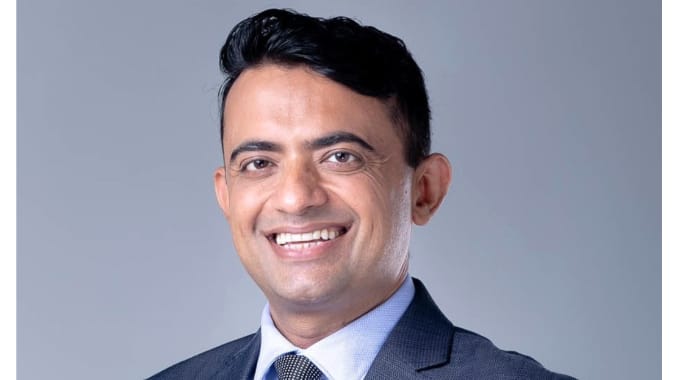
In this interview with Financial Express, Dhaval Radia, Chief Financial Officer of ZEISS India, outlines how the company is navigating financial risks, scaling operations, embedding sustainability into investment decisions and leveraging technology to shape the next phase of growth. He also shares his vision of building ZEISS India as a strategic hub for manufacturing, innovation and advanced capabilities within the global ZEISS Group.
What made you take up this position at ZEISS, and with what vision did you join?
ZEISS is one of the rare companies where scalable innovation, long-term thinking, and global responsibility come together. My vision is to help build ZEISS India not just as a fast-growing subsidiary, but as a strategic pillar of the ZEISS Group across localized manufacturing, R&D from India to the World, rapid domestic growth and advanced technologies. ZEISS sits at the core of both rapidly growing core sectors - and finance has a unique role in enabling future growth.
Where will ZEISS India’s strongest growth come from?
It will come from three converging forces. First, tier-2 and tier-3 cities, where vision care and industrial quality are upgrading rapidly. Second, new clinical and research fields such as advanced imaging, oncology, neuroscience, digital pathology. Third, advanced manufacturing and semiconductors, where India is making historic investments.
We are already aligning capital, talent, and infrastructure to these shifts, so ZEISS India is ready to build a rapidly growing product portfolio with clear value and market alignment in India over the next five years.
From a finance lens, what are your top priorities for scaling ZEISS’s India operations?
My priorities are aligned to one simple principle: build sustainable competitive advantage leveraging the portfolio of products.
That means we are investing heavily in manufacturing capacity, globally relevant capabilities, market penetration, and talent development. High-quality localization is a major financial priority - not only for cost and FX stability, but because it allows faster innovation cycles and better customer proximity.
At the same time, we are selectively expanding solutions and services - software, digital workflows, advanced microscopy, and lifecycle services - which create recurring, high-quality revenue streams.
Finance is not just funding growth; it is shaping the portfolio so that India becomes a strategic, not just a commercial, hub for ZEISS globally.
What are the biggest financial risks ZEISS India is facing and how are you planning to overcome them?
We manage three key risks: currency volatility, supply-chain dependency and execution risk during rapid scale-up. As India remains import-intensive for high-precision technologies, FX movements impact costs; beyond hedging, we are reducing this risk through localisation of sourcing, assembly and value-added services.
Supply-chain resilience is addressed through multi-sourcing, regional hubs and closer global integration. To manage execution risk in a fast-growing market, we enforce strict capital discipline, strong governance and digital financial controls to ensure sustainable profitability.
Also Read: From Heels to Feels: How Inc.5 Is Designing for a New India
How do you balance margin discipline with market development?
We look at India through a lifetime value lens.
Investments in clinician training, brand awareness, quality, engineering education, and service networks do not pay off in one quarter - they pay off over decades. We are disciplined on product margins, but we are strategically generous in building the ecosystem that supports ZEISS technologies. That is how premium brands win in price-sensitive markets, by becoming indispensable with their expertise.
What has been the impact of Gen AI in finance?
GenAI and automation are shifting finance from reporting to a predictive, automation-led function. While adoption is still early, we are embedding these technologies into the way we work, with the biggest challenge being mindset change toward an AI-first approach across a large workforce.
At ZEISS India, we apply GenAI for management insights, financial planning, working-capital optimisation and faster closes, freeing finance teams to focus on business partnering and growth. This aligns fully with the ZEISS Group’s digital, transparent and data-driven financial strategy.
How do you balance short-term profitability with long-term innovation?
We separate operational discipline from strategic ambition.
Core businesses must deliver strong cash flow and returns. That cash is then reinvested into innovation, manufacturing, and market penetration.
India offers something unique: scale plus sophistication. You can pilot advanced technologies here, achieve rapid adoption, and still access global markets. That makes India one of the most powerful innovation platforms in the ZEISS world.