
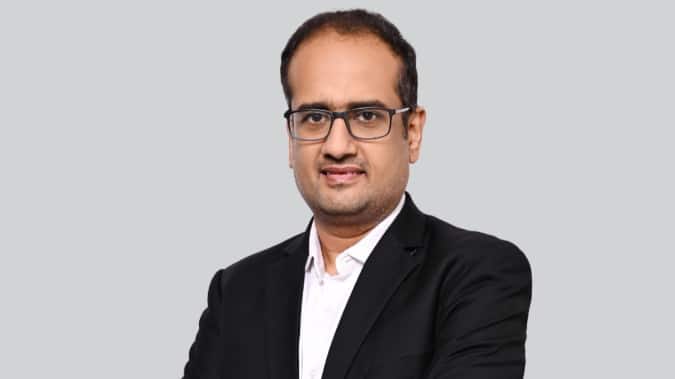
When Kaleeswaran Arunachalam stepped in as Group CFO and Head of Strategy at Crompton Greaves Consumer Electricals Ltd., the mandate was not cosmetic. In a conversation with Financial Express CFO, he outlined how the company strengthened its balance sheet, sharpened capital allocation and built a framework that could fund expansion without stretching financial discipline.
The turnaround has been visible. Crompton is now debt free and cash positive, even after acquisitions and category expansion. But the more compelling story lies in the way that outcome was engineered.
“We have been very clear that we want to put our money behind growth initiatives and not chase all the opportunities that come in. At times everything looks attractive. How you prioritise and make choices becomes very crucial,” says Kaleeswaran Arunachalam. That clarity, he argues, is what separates expansion from excess.
Cash Before Optics
At the heart of Crompton’s reset is working capital discipline. “One of the intrinsic strengths of Crompton has been a negative working capital business. Even after the acquisition of Butterfly and entering new categories, we maintained high cash generation. That helped us pay off debt in a very short time and get back to a zero debt, cash positive situation,” says Arunachalam.
The approach is simple but uncompromising. Any category entry must pass the unit economics test. “Whether we enter new categories or expand existing ones, unit economics become very important. Categories that offer good profitability and a strong working capital model remain crucial,” he says.
With a sharp focus on cash conversion guiding its decisions, the company has built resilience in a consumer durables market that is often vulnerable to commodity price cycles and seasonal fluctuations.
Also Read: How ZEISS India’s CFO is de-risking growth while building long-term value
Betting on Kitchen and Solar
The Butterfly acquisition marked Crompton’s most visible diversification move. Arunachalam frames it as a strategic adjacency rather than a departure.
“Kitchen as a category has been delivering double digit growth. It has shorter replacement cycles and is a product consumers touch every day. Butterfly is the only brand well spread across all four key kitchen categories, mixer grinder, wet grinder, pressure cooker and gas stove. That gives us the ability to sell a wider portfolio, start strong in the South and then go pan India,” says Arunachalam.
The decision combined brand leverage and category growth. “We already had early experience in the kitchen and were excited by the growth rate. Good category growth, shorter replacement cycle and differentiated product propositions made it attractive to deploy capital,” he says.
Solar rooftop was a different play but built on similar logic.
“These products come with 20 to 25 year warranties. Consumers want a trusted brand. Crompton is present in over 10 crore households. Sustainability is intrinsic to our value proposition, and rooftop solar aligns with India’s carbon commitments,” says Arunachalam.
Financially, the model was compelling, as it makes money upfront and the working capital cycle is positive because part advance comes from consumers, with good unit economics and a strong brand presence helped Crompton enter solar.
Growth with Margin Expansion
Recent growth has been driven by premiumisation and product depth across categories. “In fans, our share of premium has moved from about 17 to 18 percent to nearly 25 to 26 percent. We are focusing on BDC as an emerging category. In TPW (Table, Pedestal and Wall Fans), we gained higher market share through fit for purpose products. Solar pumps delivered a strong first year. Lighting and Butterfly returned to growth. Appliances have tripled in five years,” says Arunachalam.
Brand and innovation spending rose alongside this push. “Our brand investment moved from around 1.5 to 2 percent to nearly 4 percent. We invested about Rs 100 crore in innovation. That helped deliver the highest ever profits and free cash flow in the company’s history,” he says.
Arunachalam rejects the idea that innovation and financial discipline sit at opposite ends of the spectrum. “Constraining innovation is a poor strategy of capital allocation. But we have a structured gate process. If a product does not meet profitability thresholds, we drop it, even if it is innovative and can deliver revenue,” he says.
Deploying Surplus Capital
With the balance sheet strengthened, Crompton is preparing for its next manufacturing leap.
“We see an opportunity to build best in class factories, including what could be the world’s largest fan factory. Around Rs 350-400 crore will be allocated toward this greenfield project over the next two to three years,” says Arunachalam.
Innovation and brand building remain non-negotiable. The company further continues to reward shareholders. “We share about 40 percent of our profits with shareholders as dividend. Dividend and buyback options are evaluated consistently from a capital allocation perspective,” says Arunachalam.
Yet the principle remains constant, with Arunachalam emphasising that if cash flows are not strong nothing else helps, and that revenue and profitability must convert into cash because that discipline is fundamental.
Finance in the Age of AI
Arunachalam views artificial intelligence as an inflection point for the finance function.
“What we are seeing today is the tip of the iceberg. AI is one of those cases where you have to visualise the future before the market fully exists,” he says.
Crompton has centralised operations into a shared services model and begun embedding automation and agentic AI. “We are piloting 20 to 25 AI agents. In order to pay, AI with OCR can process thousands of documents in an hour without manual touch. Forecasting models are being built to move from data to insights and now from insights to action,” he says.
Arunachalam sees the largest gains in manufacturing precision and demand forecasting, noting that AI is not only about analysing what happened but about predicting what can happen, and that as a weather-led company Crompton can build weather forecasting into demand planning models to improve accuracy.
Finance as Strategic Partner
The finance function has been restructured to avoid being either purely transactional or purely supervisory. “Finance can be a controller and steward, or it can be a business partner. We have divided the function into three buckets, business partners, central controllers and shared services,” says Arunachalam.
Each vertical has a dedicated finance partner responsible for P&L and cash flow. Controllers safeguard governance and compliance. Shared services standardise accounting and automation. “This structure ensures agility without compromising governance. Business gets speed and the company gets discipline,” he says.
The Road to Rs 15,000 Cr
Crompton’s addressable market has expanded meaningfully through acquisitions and new category entries.
“With Butterfly, our addressable market expanded from around Rs 50,000 crore to Rs 80,000 crore, and with solar it increased to roughly Rs 1,20,000 crore. Our ambition is to take this to Rs 2,00,000 crore. We will enter categories where we have a clear right to win and exit SKUs that do not meet profitability benchmarks,” he says.
Despite near term weather disruptions, the company has continued to report sequential improvement, with steady revenue growth, expanding margins in premium segments and sustained free cash flow generation across recent quarters, alongside consistent market share gains in key categories.
The ambition over the next five years is unambiguous. “Our endeavour is to double revenue in five years and build a Rs 15,000 crore organisation,” says Arunachalam.
For him, the CFO’s remit now extends beyond safeguarding margins. It is about architecting the financial capacity to invest, scale and innovate without compromising discipline. At Crompton, that framework appears firmly in place.