
In India’s ever evolving digital payments ecosystem, scale can come quickly, but sustaining profitability requires far tighter discipline. Over the past few years, Airtel Payments Bank has focused on improving the quality of growth rather than chasing topline expansion alone. The bank has crossed an annualised revenue run rate of over Rs 3,400 crore, even as it continues to invest in technology, automation and risk controls to support long-term operating leverage.
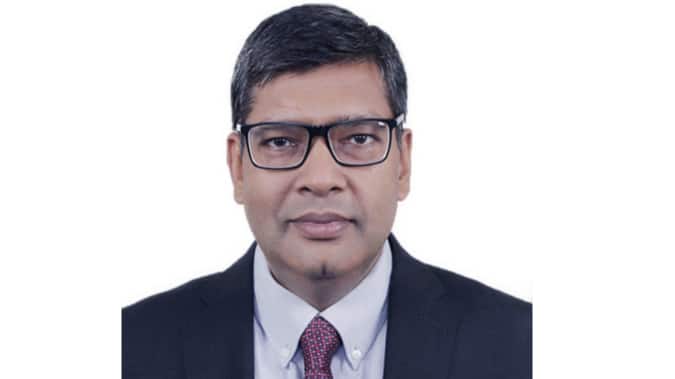
According to Anuj Bansal, CFO, Airtel Payments Bank, the strategy has been to grow in segments where unit economics are strong, build repeatable revenue streams, and keep the cost-to-serve structurally low through automation and tighter control on technology and operating expenses. In this interaction with FE CFO, Bansal talks about how the bank evaluates sustainable growth, which businesses drive profitability in a high-volume payments model, how the finance function is using AI, and why disciplined capital allocation will define the next phase of expansion. (Edited excerpts)
Q. The bank has crossed key annualised revenue milestones. What have been the biggest drivers, and how do you ensure the growth remains sustainable?
As a digital-first bank, we have focused on delivering simple, safe and accessible banking and payments solutions, and that strategy is clearly delivering results. Our annualised revenue has crossed Rs 3,400 crore, led by strong growth in the consumer business and deeper customer engagement, especially through the Safe Second Account.
At the same time, the digital B2B segment has scaled rapidly, growing nearly threefold on the back of stronger partner integrations and higher transaction intensity. This growth is supported by a scalable technology architecture and automation-led efficiency, which allows us to expand while maintaining service quality.
For us, sustainable growth is defined by unit economics, contribution margins and repeatable customer behaviour rather than topline alone. Our consumer business contributes about 40 percent of revenue, with over 27 million monthly transacting savings account users and annualised ARPU above Rs 480, which reflects healthy monetisation at scale.
On the cost side, optimisation has come from tighter control on IT spend, deeper automation, stronger quality processes and selectively bringing critical capabilities in-house. These steps have structurally reduced cost-to-serve and improved operating leverage.
Also More: US-Iran War: What’s the CFO Mindset Right Now?
Q. In a high-volume payments business, which segments actually drive profitability?
The consumer business is the largest contributor to revenue, accounting for around 40 percent of the total. It is driven by strong adoption of the Safe Second Account, high transaction frequency and recurring income from everyday banking and payments use cases.
This is also the segment with the strongest profitability. Nearly 38 million users transact through UPI on our platform, and the consumer business delivers the highest profitability per customer, with contribution margins of around 50 percent and a stable annuity-led revenue profile.
In payments, scale alone does not create value. Profitability comes when scale, engagement and consistent monetisation move together.
Q. How do you approach capital allocation while the business is still expanding?
Every major investment goes through a disciplined capital allocation framework and is discussed in detail with the Board and shareholders. We evaluate three things before committing capital.
First, alignment with our long-term digital-first strategy. Second, the ability to generate attractive returns over time, even if near-term payback is modest. Third, future readiness in terms of scalability, regulatory compliance and technology strength.
Investments in technology, customer experience, data capabilities and secure banking innovations such as Safe Second Account are evaluated through this lens. This ensures we continue to invest for growth without compromising financial discipline.
Also Read: Covid Lessons, Crude Reality: CFOs Enter Another Crisis Cycle
Q. Where has AI made a visible difference in the finance function so far?
AI adoption in finance is still at an early stage, but the impact is already visible. We are using it across analytics, reporting, reconciliations and insight generation to improve speed and accuracy.
AI-driven tools are helping reduce manual effort, strengthen control frameworks and enable faster decision-making. As these use cases scale, we expect measurable gains in productivity, governance and quality of financial insights.
Q. What are the key financial risks in a digital payments business, and how do you protect profitability while staying compliant?
Cybersecurity and fraud remain among the biggest risks in a digital-first ecosystem. These risks are not limited to direct losses. They can affect customer trust, brand credibility and long-term sustainability.
Fraud attempts, data breaches and system vulnerabilities can gradually erode margins if not managed proactively. We address this through strong fraud detection systems, real-time monitoring, strict compliance frameworks and continuous security audits.
Financial discipline also applies to tax and regulatory compliance. Our approach is based on transparency and full alignment with statutory requirements. We use legitimate mechanisms such as carried-forward losses to improve capital efficiency, but always within a strong governance framework.
Q. What has delivered the best return on investment so far, and what is the next phase of growth?
The expansion of the consumer business has delivered the strongest returns. By leveraging our digital and retail distribution along with data-led insights, we have increased transaction frequency, improved customer lifetime value and strengthened savings account engagement. This has translated into higher contribution margins and capital-efficient growth.
In the near term, our goal is to exit the year with around 30 million monthly transacting savings account users while continuing to deepen engagement.
Over the next five years, the focus is on building a high-scale digital banking institution with strong governance, resilient profitability and consistent customer trust. Growth will continue, but it will be guided by discipline, strong unit economics and careful capital allocation.