
Nippo batteries have long been part of India’s fast-moving consumer landscape. However, behind the familiar brand presence lies a business constantly navigating commodity volatility, supply chain disruptions, changing consumer expectations and rapid technological transformation.
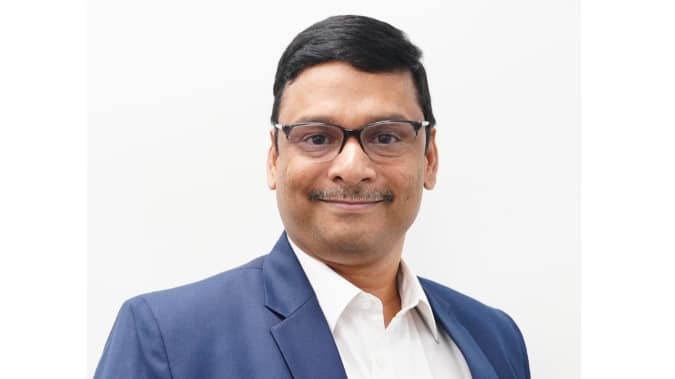
S R Aravind, CFO of Indo National Limited, the company behind the widely recognised Nippo batteries, is helping shape a finance function that is not only managing these pressures but also enabling the company’s next phase of sustainable and technology-led growth.
Aravind believes the modern CFO must operate not merely as a financial custodian, but as a strategic partner capable of driving business adaptability in an increasingly unpredictable market.
“The role of a CFO today extends far beyond traditional financial stewardship,” he says. “Finance leadership must actively contribute to strategy, operational agility and long-term resilience.”
The company is strengthening forecasting capabilities, improving cross-functional visibility and investing in technology-driven efficiencies that enable quicker responses to market shifts. In a sector like batteries and consumer products, where raw material costs can swing sharply and demand patterns can shift rapidly, the ability to respond in real time has become a competitive necessity.
Managing Volatility Through Discipline and Data
Commodity volatility remains one of the defining challenges for battery manufacturers. Input costs linked to metals and other raw materials can fluctuate unpredictably, directly impacting margins.
Aravind says the company’s response combines agility with disciplined execution.
“We closely track commodity trends, procurement cycles and inventory movements to minimise cost pressures,” he explains. “At the same time, we focus on operational efficiencies, productivity improvements and portfolio optimisation to maintain stability.”
Rather than reacting to market disruptions after they occur, Indo National has adopted regular scenario planning and data-led reviews to strengthen preparedness. According to Aravind, this approach allows leadership teams to make timely decisions without losing sight of long-term priorities. This balance between short-term agility and sustainable growth is also central to the company’s broader market strategy.
“In a competitive consumer business, sustainable growth cannot come at the cost of long-term profitability,” he notes.
Instead of pursuing aggressive volume expansion alone, the company is simultaneously focusing on premiumisation, distribution strengthening, innovation and differentiated product offerings. The objective, he says, is “profitable and sustainable growth rather than purely volume-led expansion.”
Building Resilience in the Supply Chain
Global supply chain disruptions over the past few years have fundamentally altered how companies think about operational resilience. For Indo National, protecting the bottom line has required multiple financial and operational levers working together.
Aravind points to diversified sourcing strategies, tighter working capital management and manufacturing efficiencies as critical measures helping the company navigate uncertainty.
“We are also increasing our focus on localisation and strengthening supplier ecosystems to reduce dependency on external disruptions,” he says.
Alongside localisation, the company is investing in automation and process optimisation to improve productivity and cost efficiency across operations. These measures are not simply defensive responses to volatility; they are part of a broader attempt to build a more agile and scalable operating model.
Finance Function as a Real-Time Intelligence Hub
One of the most visible changes in modern finance leadership is the shift from backward-looking reporting to real-time business intelligence.
At Indo National, Aravind is positioning the finance function as a data-driven decision support engine that influences operational and strategic choices across the organisation.
“The finance function is increasingly becoming data-driven and insight-led,” he says.
The company is leveraging business intelligence tools and analytics platforms to improve visibility across costs, inventory, sales performance, and profitability metrics in real time. This, according to Aravind, is enabling faster and more informed decision-making while improving forecasting accuracy and operational responsiveness.
The increasing integration of technology into finance is also accelerating discussions around artificial intelligence and its role in corporate decision-making.
Building AI-Enabled, Human-Led Finance Function
Aravind sees significant potential for AI across forecasting, predictive analytics and risk assessment. In particular, he believes AI’s immediate impact will be strongest in forecasting accuracy and pattern identification.
“AI-driven models can help identify patterns faster, improve forecasting accuracy, and support proactive risk assessment,” he says.
However, he does not believe finance functions are ready to fully hand over critical decision execution to machines.
“Human judgment will continue to remain critical, especially in strategic and high-impact decisions,” Aravind says. “Finance leadership involves context, risk evaluation and business understanding that cannot be fully automated.”
Instead, he envisions a collaborative future where AI strengthens analytical capabilities while human oversight ensures accountability, balance, and strategic alignment.
This pragmatic view is also influencing how Indo National approaches technology investments. Rather than adopting fragmented digital solutions, the company is prioritising simplicity, scalability, and integration.
“Technology investments must solve business problems and improve decision-making rather than create fragmented systems,” Aravind says.
The Expanding CFO Mandate
The CFO’s responsibilities are also expanding into areas such as ESG reporting, governance frameworks, and sustainability disclosures. According to Aravind, this evolution is changing the nature of the CFO-auditor relationship as well.
“The CFO-auditor relationship is becoming far more strategic and collaborative than before,” he says.
Beyond financial compliance, the focus today includes sustainability metrics, governance standards, and data transparency — all of which are becoming increasingly important for stakeholder confidence and regulatory preparedness.
For the next generation of finance leaders, Aravind believes success will depend on combining financial expertise with digital adaptability, strategic thinking, and business understanding.
“The ability to balance technology with human judgment will become increasingly important in an AI-driven environment,” he says.
Underlying all these perspectives is a leadership philosophy grounded in accountability, adaptability, and long-term value creation.
“My leadership philosophy is rooted in balanced decision-making,” Aravind says. “Sustainable growth comes from taking measured decisions that create value not just for the business, but for all stakeholders associated with it.”
In an era where disruption has become constant, that balance may well define the future of finance leadership.