
The traditional CFO was once seen as the gatekeeper — the executive who said “no” with a spreadsheet in hand. Today, the role of the CFO has evolved far beyond financial reporting and compliance. Modern CFOs are increasingly expected to shape business strategy, guide organisations through uncertainty, enable growth and act as key partners to CEOs and boards.
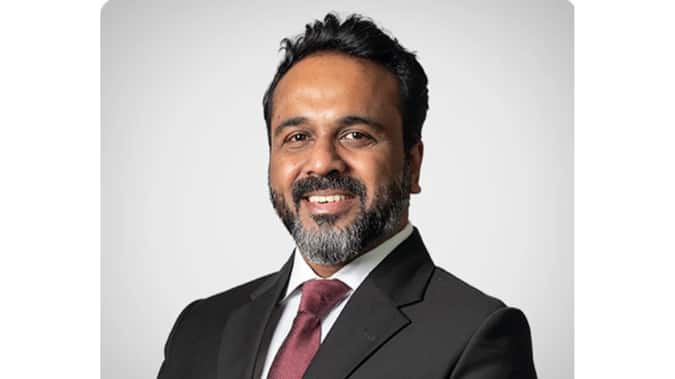
One finance leader who exemplifies this changing mandate is Bittu Varghese, CFO, Table Space.
Having built a career across Sula Vineyards, Pernod Ricard, Marico and Hindustan Coca-Cola, Varghese has witnessed firsthand how finance leadership is being redefined.
He describes his career path as a “deliberate journey through diversity.” Across sectors and business models, he says, each role contributed a different layer to his leadership philosophy.
“In all my previous assignments, I was operating in a consumer-brand environment where the business had a proud, legacy-driven culture and emotionally resonant products,” he adds.
One of the defining moments of his career came during his stint at Sula Vineyards, where he led the company’s IPO journey. The experience, he says, fundamentally changed his understanding of finance leadership.
“The Sula Vineyards IPO taught me that a CFO’s most important skill in a high-stakes capital market transaction is not just technical financial knowledge; it’s building conviction across stakeholders,” Varghese says. “You must translate a compelling business narrative into numbers that hold up to public scrutiny.”
He also points to the practical outcomes of that journey, including cost negotiations and strategic handling of legal and tax matters during the IPO process.
Moving from a consumer-centric environment to Table Space, however, required a complete reset.
“This is a B2B, high-growth, capital-intensive sector where the finance function must operate like an engine of scale, not just a custodian of compliance,” he says.
Varghese believes working with promoter-driven organisations versus multinationals also shapes leadership differently.
“Promoters build speed and courage; multinationals build discipline and scale,” he remarks. “The strongest leaders learn to walk the tightrope and balance both.”
The CFO as a Strategic Partner
For Varghese, the modern CFO’s role extends far beyond financial stewardship.
“At Table Space, I see my mandate as sitting at the intersection of stewardship and value creation,” he says.
On one side lies governance: ensuring robust controls, risk management frameworks, compliance structures and investor reporting standards. On the other side lies strategy: expansion planning, pricing decisions, investment structuring, mergers and acquisitions and capital deployment.
“The CFO who limits themselves only to compliance and reporting is leaving significant value on the table,” he says.
Varghese believes three leadership traits matter most in today’s high-growth sectors: intellectual curiosity, the ability to simplify complexity into actionable decisions and the courage to challenge prevailing assumptions.
“You need the courage to speak truth to power, even when the business teams want to hear something different,” he says.
Finance in the Age of Technology
At Table Space, digital transformation is not restricted to customer-facing products; it is reshaping the finance organisation itself.
“The very nature of our business forces the finance function to be tech-forward,” Varghese says.
Table Space currently operates across more than 80 centres spanning multiple cities, making traditional finance management impractical. To manage scale, the company has transformed finance into what Varghese calls a “real-time intelligence function.”
“We have automated revenue reconciliation, dynamic cost tracking and integrated dashboards that give leadership live visibility into occupancy, collections and capex deployment,” he explains.
One notable step has been the creation of a dedicated finance automation team tasked with eliminating routine manual processes.
“We have a clear mandate of automating every single routine transaction or time-sensitive activity within finance and compliance,” he says.
This shift is also changing the profile of finance professionals themselves.
“The days of finance being purely a numbers-in, reports-out function are behind us,” Varghese says, adding, “Today, finance teams need to be comfortable with data tools, ERP systems, analytics and operational decision-making.”
Data as a Competitive Weapon
At Table Space, analytics plays a central role in expansion and capital allocation decisions.
“Data analytics and financial modelling are not support functions here, instead they are competitive weapons,” Varghese says.
The company’s business model, which caters largely to multinational corporations including Google and Microsoft, relies heavily on sophisticated financial modelling.
Every new centre undergoes detailed NPV and IRR analysis, considering lease escalations, fit-out capex, occupancy ramp-up timelines and contractual structures.
“We build occupancy probability models that help us sequence launches so that we are not over-deploying capital into markets where demand signals are still maturing,” he explains.
According to Varghese, achieving occupancy levels above 90 per cent across more than 10 million square feet does not happen accidentally.
“It happens because of disciplined real-time tracking of seat-level demand, renewal pipelines, and proactive portfolio optimisation,” he says.
The company’s growth numbers reflect that momentum. Adjusted revenue has risen sharply over the past few years and Varghese says the emphasis remains on ensuring that revenue growth translates into sustainable operating leverage.
“Analytics tells us where to push and where to pause,” he says.
AI Will Amplify — Not Replace — CFOs
Like many business leaders, the Table Space CFO sees artificial intelligence fundamentally reshaping finance functions over the next few years. However, he dismisses the idea that AI will reduce the relevance of CFOs.
“AI and automation will fundamentally separate two types of CFOs: those who get displaced and those who get amplified,” he says and adds, “I firmly intend to be in the latter camp.”
According to him, routine functions such as accounts payable, reconciliations, audit documentation and statutory compliance are likely to become increasingly automated.
“This is not a threat; it is a gift,” he says. “It frees finance teams to focus on higher-order work like scenario planning, governance, and capital markets strategy.”
Still, Varghese believes human judgement will remain irreplaceable.
“What AI cannot replicate is judgement under uncertainty,” he says. “When interest rates move or when a key client renewal is at risk, those are human decisions requiring contextual wisdom and ethical clarity.”
Growing Fast, But Staying Disciplined
Scaling a fast-growing business while simultaneously building governance systems is never easy — something Varghese openly acknowledges.
“I like to say we are flying a jet plane and building it at the same time,” he says.
For him, the biggest risk in high-growth companies is allowing governance to lag behind expansion.
“At that pace, the control environment must scale as fast as the business, or you accumulate governance debt that compounds dangerously,” he says.
To prevent that, Table Space has embedded controls directly into ERP workflows and automated approval structures.
“Every manual control is a scaling bottleneck,” Varghese says.
He also believes governance becomes easier when business teams understand its strategic importance.
“When teams realise that a clean control environment improves fundraising, lender confidence, and IPO readiness, compliance stops feeling like a finance imposition,” he says.
Beyond Real Estate
One misconception Varghese is particularly passionate about correcting is the tendency to classify Table Space as a traditional real estate company.
“We are fundamentally not a real estate company,” he says firmly.
Unlike asset-heavy developers, Table Space operates through a Workspace-as-a-Service model that combines leasing, design, construction, operations, and technology.
“We are in the service-delivery business with real estate as the substrate — not the asset,” he explains.
That distinction, he says, changes everything from financial metrics to risk structures.
“Our revenue is recurring services revenue, not rental income,” Varghese says. “And our back-to-back lease model significantly reduces vacancy risk.”
Preparing for the Next Phase
Looking ahead, Varghese’s vision for Table Space is ambitious but measured.
“The vision is straightforward, even if the execution is complex — to make Table Space the default infrastructure partner for how India’s enterprise workforce operates,” he says.
That ambition rests on three pillars: IPO readiness, deeper technology integration, and capital-efficient expansion.
“Scale without profitability improvement is not a vision — it is a liability,” Varghese remarks.
More broadly, he believes finance itself will play a defining role in shaping India’s future workspace ecosystem.
“As enterprises become more sophisticated about occupancy costs and balance-sheet flexibility, workspace decisions will increasingly become financial strategy decisions,” he says.
And in that future, the role of the CFO will only become more influential.
“The future of workspaces in India,” Varghese says, “will be shaped as much in finance boardrooms as in design studios.”