
Despite the rapid shift towards digitalisation, S Chand Group has remained profitable, reporting its strongest EBITDA in the past five years. The company has strengthened its market position through a series of adaptive initiatives.
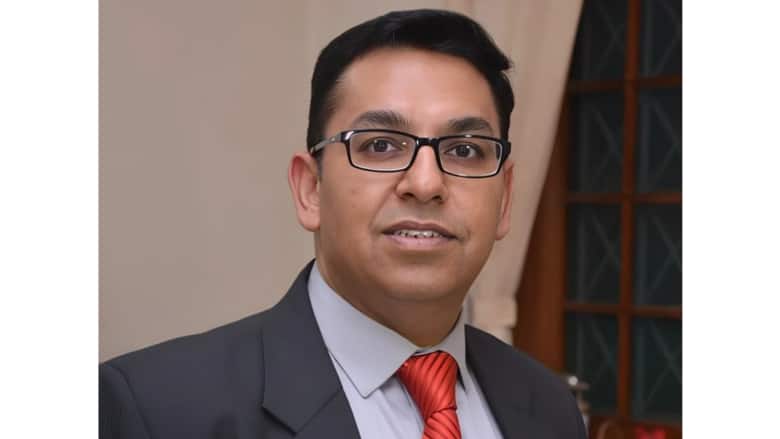
In an interaction with FE CFO, Saurabh Mittal, CFO of S Chand Group explains the company’s top financial priorities and the roadmap over the next few years.
What were the key financial interventions behind your strongest EBITDA performance in five years, and how is this shaping the company’s strategy as industry economics evolve?
The EBITDA improvement last year came mainly from content licensing revenue, which had better margins due to favourable pricing, and from the cost side where paper prices stayed flat while product prices increased, improving gross margins.
Strategy-wise, the approach differs by segment. In K to 8, which is about 80 to 85 percent of our business, demand remains stable since physical books are still required. In classes 9 to 12, there is some shift towards YouTube and digital content, so we have started our own channel and apps, though monetisation is still limited.
In higher education, the test prep segment, including titles like R S Agarwal, is seeing impact from online videos, so we are working with digital educators and bringing their content into print. In the college segment, dependence on library copies has reduced book purchases significantly.
So the financial strategy cannot be uniform. Each segment needs a different approach, and that is how we are managing the business.
How do you manage growth and maintain stable cash flows in a seasonal business while keeping the balance sheet debt-free?
Our focus is to remain debt free by the end of the year. Since ours is a seasonal business, production starts around August or September, peaks by December, and supplies go out between January and March or April. Because of this, the investment-heavy period runs from September to February, and by March we usually return to a debt free position. June is typically when cash levels are the highest as the season closes.
We manage this through bank working capital limits and vendor bill discounting, where supplies are taken on 150 to 180 days credit and cleared once collections come in. Working capital has been stretched at times, so we reduced the number of channel partners, especially those with irregular payments, which has helped improve receivables and keeps cash comfortable till around September.
We are also tightening inventory levels, and with the recent NCF change, the cycle should improve further over the next year.
What role will the international curriculum segment play in your portfolio, and can it outpace K–12 and higher education in growth and margins?
There was always a gap for us in the international segment. Earlier we considered entering through an acquisition, but the deal was expensive at that time. Now we have acquired a small company, CPD Singapore, with revenue of about half a million dollars, but with strong potential since it currently works only on order-based supply. The company already services CBSE and ICSE schools across the Middle East and parts of South and Southeast Asia, but sees significant untapped potential in international curriculum schools such as IB and IGCSE, where it currently lacks a dedicated sales presence.
With a proper marketing team and backend support from India, content development and pre-press can be done here at much lower cost, so we see scope to grow this business five to ten times.
This segment should grow faster and margins will also be better since it caters to premium K-12 schools where pricing is less of a constraint. In CBSE and ICSE we are already among the largest players, so high growth is difficult, which is why we are looking at areas where we are not present.
That said, the education business will still depend on volume. The price per book is not very high, so even if margins improve in some segments, overall growth will continue to be volume driven.
The company already services CBSE and ICSE schools across the Middle East and parts of South and Southeast Asia, but sees significant untapped potential in international curriculum schools such as IB and IGCSE, where it currently lacks a dedicated sales presence.
How do you see the revenue mix evolving as digital, content licensing and IP-led monetisation start contributing more meaningfully to the business?
Right now the contribution from digital and content licensing is still small. Last year we did roughly 20 crore out of about 720 crore from this segment. This year we have already seen about 50 percent growth over last year, and the pipeline looks reasonably strong.
We are also expanding the scope of this business. Earlier the demand was for basic content datasets, but now many AI models have already been trained on that. The requirement is shifting towards more advanced and synthetic datasets, so we have created a separate team to work on building higher level data that can be used for training models.
Our first set of samples should go out by the end of March, and we will get a better sense of market response by April. At present we are working with four or five large customers, but there are many more companies globally that are building models. We have not fully tapped that yet.
Going forward, we also plan to list our datasets on global data marketplaces, which should open up a larger customer base. So while the contribution is small today, we expect this segment to grow faster than the core business and gradually become a more meaningful part of the revenue mix.
Also read : How ZEISS India’s CFO is de-risking growth while building long-term value
As you scale the business, which financial risks are you most focused on, and how much capital is being deployed towards expansion at this stage?
The main area we are watching closely is inventory, because that is where the largest amount of capital gets tied up in our business. At the same time, costs are going up, so revenue growth has to keep pace to maintain margins. We are investing in new warehouses and also setting up a new printing facility, since the current capacity is limited. Once these are fully operational, we expect better efficiency across the business, which should reflect from FY27 onwards.
In terms of capital deployment, the requirement is not very large. This year our capex will be around 30 to 40 crore, while internal generation should be in the range of 100 to 120 crore. On a normal basis, annual capex is closer to 20 crore, so we do not see any major financial risk from the investment side at this point.
What are the top financial priorities guiding your roadmap over the next few years, and what is your financial outlook for the current year?
Our focus is on three things. First is to keep generating steady cash flows from the business. Second is to keep improving our working capital metrics, because that is critical in our kind of business. And third is to see how we can use technology to improve internal efficiency and bring down the cost of operations.
For FY26, we are looking at revenue of around 800 crore, with EBITDA margins in the range of 18 to 20 percent.