
The merger and acquisition (M&A) landscape is more competitive than ever. Valuations are often stretched and integration risks run high. In this scenario, disciplined capital allocation has become a defining capability for CFOs.
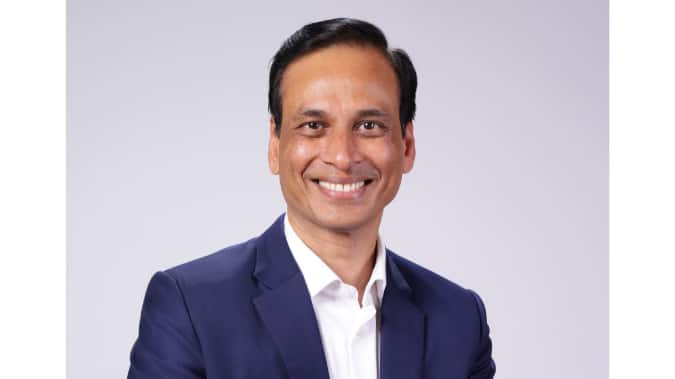
Rajendra Shreemal, CFO of Quest Global, tells how his company approaches acquisitions with a long-term, capability-led lens rather than chasing scale.
In our conversation, he shares how Quest Global is building differentiated engineering depth, navigating valuation pressures and ensuring that every deal delivers sustainable value for clients, employees and shareholders.
Q: What has been the strategic intent behind Quest Global's recent M&A activity, including the acquisitions of BITSILICA, Alpha-Numero and People Tech Group?
Rajendra Shreemal: Quest Global's merger and acquisition (M&A) strategy is deliberately capability‑led rather than scale‑driven. We are focused on building differentiated engineering depth to solve increasingly complex, safety‑critical and sustainability‑driven problems for our clients.
Our recent acquisitions perfectly align with this capability-led approach: we are integrating deep skills in semiconductor engineering, safety-critical systems and digital transformation.
We are accelerating access to scarce, specialized talent in a tight global engineering market. By onboarding established teams into Quest Global’s family, the company is better positioned to serve our clients on large-scale projects.
Enhancing end‑to‑end solutioning allows us to integrate these teams into Quest Global's global delivery ecosystem to support safer systems and a greener future.
Ultimately, these acquisitions demonstrate our commitment to care for our customers' businesses as if they were our own — by investing ahead of demand and remaining a trusted, long-term engineering partner.
Q: What are the most critical financial metrics you, as a CFO, focus on when assessing a potential acquisition?
Rajendra Shreemal: As a CFO, I look beyond headline growth and focus on the quality, durability and cash-generating ability of earnings.
Key metrics include:
· Shared vision with the founder on what we are trying to build together
· Revenue quality and sustainability, with emphasis on diversification and depth of client relationships.
· Synergy potential, particularly cross-selling and capability-led revenue expansion that benefit both Quest Global and our clients.
· Cash flow and EBITDA, because earnings without cash constrain reinvestment in growth initiatives.
Our philosophy is disciplined investment: deploying capital where it strengthens long-term value creation and sustainable success, rather than short-term financial optics.
Q: How do you decide on valuation in competitive deal environments where asset prices may be inflated?
Rajendra Shreemal: Valuation is as much an art as it is a science. Our approach involves collaborating closely with business founders from the outset to identify synergies and engage in transparent discussions regarding both the potential benefits and associated risks.
In a competitive market, it is easy to get caught up in hype, but our focus remains firmly on creating long-term value rather than chasing short-term wins. We anchor our decisions in reality, by assessing opportunities against realistic, risk-adjusted intrinsic value and evaluating multiple scenarios, paying as much attention to potential downside as to upside. This disciplined approach helps ensure we are not relying purely on optimism. When a deal does not align with our clients' interests or our long-term strategic goals, we are prepared to walk away, reinforcing our commitment to capital discipline and responsible growth.
Q: What’s the role of scenario planning or stress testing in the deal evaluation process?
Rajendra Shreemal: We believe in hoping for the best while preparing thoroughly for the most challenging business scenarios, and scenario planning is central to how we do this. We model multiple outcomes by testing base, upside, and downside scenarios, and rigorously stress-test key variables such as revenue growth, margin pressure and employee retention.
Also, our joint scenario planning with founders allows us to identify 360-degree risks early, build mitigation strategies upfront and set realistic expectations, ensuring smoother integration and protecting both shareholder and client value.
Q: What are the major concerns during due diligence? How do you mitigate them?
Rajendra Shreemal: Trust is built with transparency and due diligence is where we uncover the true health of an organization. We start with a hypothesis on the strategic rationale of the deal and validate the same as part of due diligence (DD).
Key red flags can include:
· Revenue concentration: Over-reliance on a single client or sector.
· Weak cash conversion: Poor cash flow despite decent earnings on paper.
· Cultural misalignment: If a leadership team lacks humility or an entrepreneurial spirit, M&A will fail.
We mitigate these by diving deeper into the financials, engaging in conservative scenario planning and starting our cultural integration plans before the deal even closes.
Q: Beyond financials, what steps do you take to ensure cultural compatibility before closing a deal?
Rajendra Shreemal: Financials only tell half of the story; it is the people who complete the picture. We look for dreamers and doers, individuals and teams who think big while operating with discipline and humility. Our evaluation goes beyond leadership narratives to understand how daily operations actually function, including how decisions are made and how teams collaborate. We engage across all levels, from engineers to managers, to assess talent depth and alignment with our purpose. Above all, we focus on shared values, ensuring a common passion for making the impossible possible and consistently delivering on commitments to our customers.
Q: What metrics do you use to track value creation post-M&A? What KPIs or milestones matter most?
Rajendra Shreemal: A deal's true success is proven long after the ink dries, which is why we track value creation through both measurable outcomes and human impact. Financial KPIs, such as revenue growth, margin expansion and cash flow, provide a clear view of how the combined business is performing and whether the fundamentals remain sound.
However, KPIs alone do not create value; they measure it. Value creation starts much earlier through upfront alignment on business plans, where we agree on strategic priorities and how the combined capabilities work together to deliver outcomes for clients. This alignment ensures that financial metrics reflect deliberate execution rather than incidental performance.
Equally important are people-related metrics; retaining and engaging our new people at Quest Global is critical to protecting institutional knowledge and sustaining delivery excellence. We also focus on intangible, strategic benefits that are not fully captured by financial KPIs. A key example is our ability to transfer domain expertise across industries such as leveraging semiconductor engineering capabilities into medical devices, aerospace and automotive programs. These cross-domain applications expand addressable opportunities, deepen client relevance and create long-term strategic value that may not be immediately visible in the short-term financial metrics.
Finally, customer success serves as a critical validation point. Client retention, repeat engagements and cross-selling outcomes indicate whether we are truly operating as a trusted, long-term partner rather than simply integrating balance sheets.
Q: In this whole process, what major challenges have you faced? What did you learn from those experiences?
Rajendra Shreemal: The hardest part of M&A is rarely the math; it is the human element. In competitive situations, we must balance speed with care; tight timelines cannot come at the expense of thorough diligence. Cultural integration presents another significant challenge as it requires aligning different systems and mindsets while ensuring our customers experience zero disruption. The key lesson is that value is created post-close and successful integration depends on early, transparent communication and a culture of empathy.
Q: How do you see the M&A landscape evolving in your sector over the next 2–3 years?
Rajendra Shreemal: The demand for solutions that create a greener and safer world is accelerating. We expect the M&A landscape to remain highly active.
· Capability over scale: The industry is shifting toward targeted acquisitions. Companies want deep expertise in digital engineering, AI and semiconductors rather than just adding bulk.
· Localized engineering: Supply chain shifts mean clients need localized support.
· Strategic fit: Deals will be judged on how well they help clients solve incredibly complex, future-facing problems.
Q: How has the CFO's role evolved and what skills are now essential in M&A?
Rajendra Shreemal: The role of the CFO at Quest Global has always been a strategic dealmaker. The role demands a strategic partnership mindset, actively identifying opportunities, structuring transactions, raising debt/equity capital and driving successful integration.
Empathy and leadership are equally critical as effective CFOs need strong cross-functional skills to connect financial strategy with human insight. Ultimately, caring for the business and the people within it is essential to achieving sustainable success.