
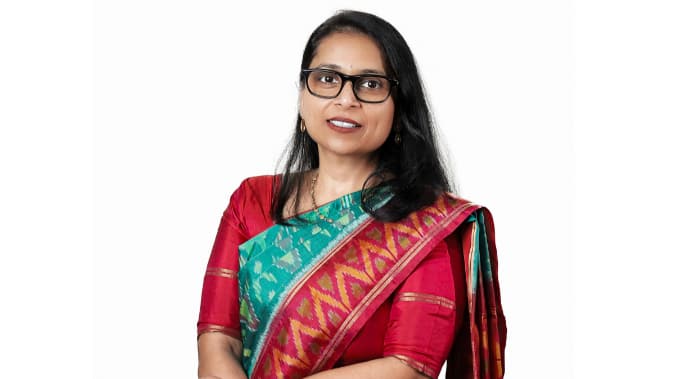
As the lending landscape navigates changing interest rate dynamics and liquidity conditions, UGRO Capital is maintaining a conservative balance sheet while pursuing growth opportunities in select MSME segments, according to Shilpa Bhatter, CFO, UGRO Capital.
"We are keeping the balance sheet conservatively positioned, with liquidity first and growth second," Bhatter said. The company closed Q4 FY26 with ₹15,334 crore in assets under management (AUM) and a capital adequacy ratio (CAR) of 21.2 per cent.
"The focus is on tight asset liability duration management, healthy liquidity buffers and deploying capital only where credit visibility is strong," she added.
On the funding side, UGRO is working to diversify its borrowing sources. "We are actively diversifying the liability base through longer tenors, deeper banking relationships and growing access to development finance and capital markets," Bhatter said. According to her, the objective is "a structural reduction in borrowing costs, not a cyclical one."
She noted that while the company continues to evaluate external commercial borrowings, "elevated hedging costs in the current environment limit the all in benefit, so we remain selective on that channel."
Bhatter said capital allocation decisions have become increasingly targeted amid macroeconomic uncertainty. "Capital allocation is more surgical than ever. We are directing resources toward segments offering the strongest combination of risk adjusted return and credit visibility," she said, adding, "The shift toward emerging market LAP and embedded merchant finance, which moved from 32 per cent to 38 per cent of AUM in Q4 FY26, reflects a deliberate rebalancing to improve both portfolio quality and long-term scalability."
While geopolitical tensions and global trade disruptions remain a concern, Bhatter said they do not alter UGRO's core strategy. "These tensions reinforce our caution but do not alter the core strategy. Our MSME borrowers are primarily driven by domestic demand," she said and added, "The goal is to build a balance sheet that absorbs external shocks without constraining MSME credit delivery."
On asset quality, the company closely tracks early warning indicators. "We monitor collection efficiency, DPD migration in the zero to 30 day bucket and repayment behaviour in cyclically sensitive exposures before stress appears in reported delinquencies," Bhatter said.
She added that the company's focus on emerging market LAP (loan against property) and embedded finance enhances risk monitoring through "stronger collateral coverage, better cash flow predictability and higher data visibility."
Underwriting discipline is embedded within UGRO's operating model, Bhatter said. "Discipline is built into the architecture rather than imposed externally. Our DataTech led model combines digital sourcing with granular credit filters and sector specific underwriting standards, reducing reliance on individual judgment and improving consistency at scale."
The company also maintains "hard portfolio guardrails such as concentration limits, exposure caps and minimum data quality thresholds."
Analytics play a central role across the lending lifecycle. "Analytics function as core infrastructure," Bhatter said. "We use data across the full lending lifecycle, from applicant scoring and bureau enrichment at underwriting to real time DPD monitoring."
In MSME lending, she said, transaction-level data such as GST flows, banking behaviour and supply chain activity provide "a more reliable and timely view of creditworthiness."
Bhatter believes growth and liquidity can coexist when balance sheet management is disciplined.
"Growth and liquidity are not in conflict when the balance sheet is structured correctly," she said. "Origination is managed within our internal liquidity framework."
She noted that Q4 FY26 reflected this approach, with strong AUM growth alongside a 21.2 per cent CAR and comfortable liquidity buffers.
On the question of profitability versus financial inclusion, Bhatter rejected the notion of a trade-off.
"We do not view it as a trade-off. Inclusion is sustainable only when supported by sound economics," she said, adding that emerging market LAP and embedded merchant finance help serve underserved borrowers while maintaining strong credit economics.
She also highlighted changing borrower expectations in the MSME segment. "Borrowers increasingly expect faster, embedded and contextual credit rather than a separate application process," Bhatter said. "Embedded finance addresses this by delivering credit at the point of commercial activity."
Bhatter also talked about the role of the today's CFOs. "The role is now deeply integrated with strategy. It spans capital raise and allocation, liability mix, portfolio governance and operating efficiency," she said and added, "The finance function plays a central role in translating strategic priorities into financial outcomes, including decisions on product mix, origination investment and balance sheet architecture.
Looking ahead, Bhatter sees both challenges and opportunities for the NBFC sector.
"Key risks include funding cost volatility, intermittent liability tightening for mid sized NBFCs and localized asset quality stress in cyclical MSME segments," she said. At the same time, "opportunities lie in embedded finance, emerging market LAP and data-led secured lending where disciplined specialist lenders can build durable franchises."
For UGRO, she said "the focus is on translating strategic realignment into stronger profitability, efficient liabilities and sustained portfolio quality."